
INSIGHT
Strategies for Parents to Cope With Competition Stress.
Practical sport psychology strategies to help climbing parents manage competition stress, respond supportively, and stay calmer before, during, and after youth competitions.

QUICK TAKEAWAY:
Competition stress is normal for parents too.
If your child competes, you are likely carrying stress of your own: hoping things go well, trying to support them properly, managing logistics, and handling the emotions that come with wins, losses, and expectations. The goal is not to become a perfectly calm parent. The goal is to respond more intentionally and create a steadier environment for your child.
➤ Pay close attention to your child's real emotional cues instead of assuming how they feel.
➤ Stop comparing your child, or yourself as a parent, with other families.
➤ Protect your own energy and take time for yourself.
➤ Prepare for stressful situations in advance so you feel less overwhelmed on the day.
➤ Reframe negative thoughts so they do not take over your reactions.
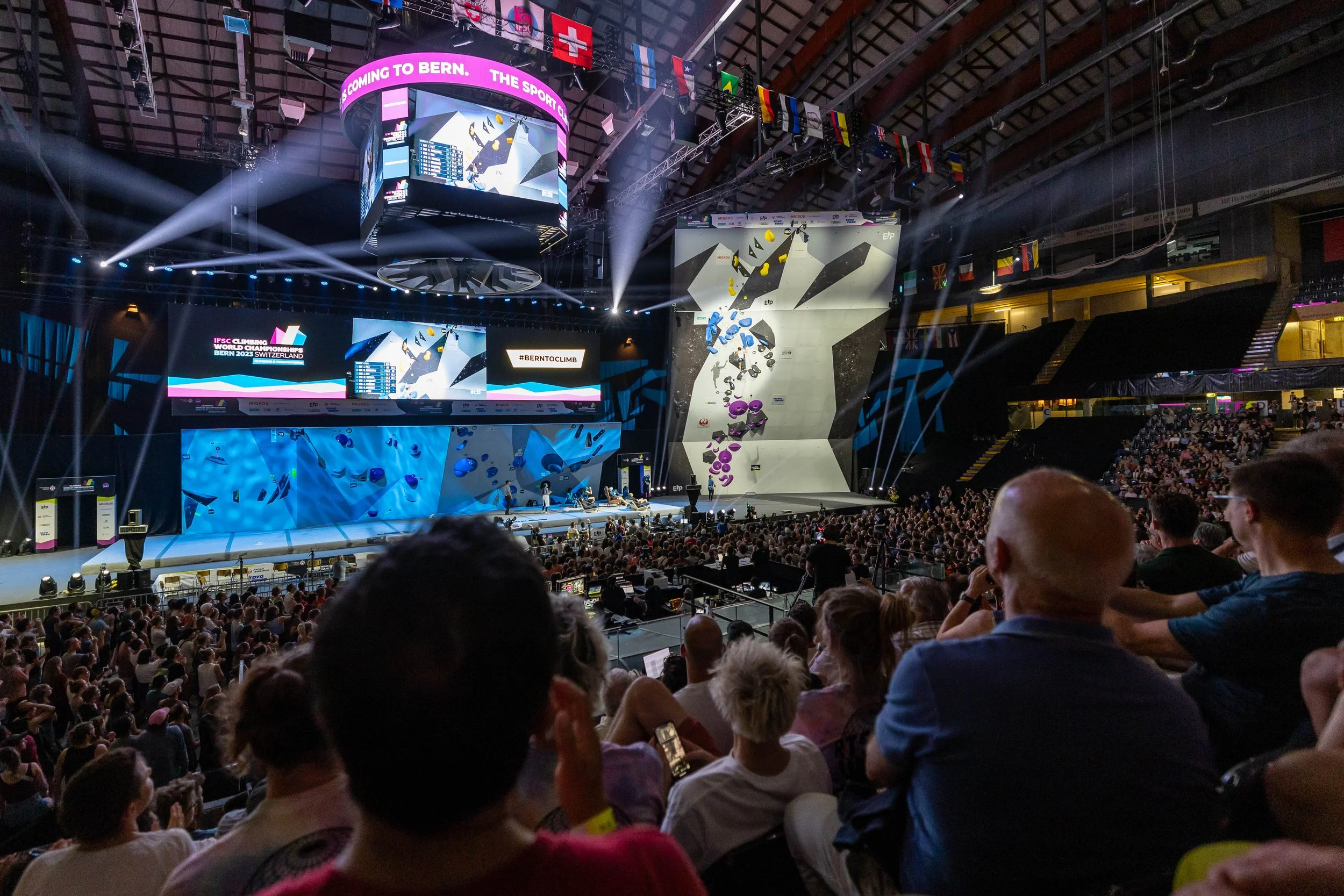
Competition can be stressful not only for young athletes, but also for the people who support them most. If you are a climbing parent, you may know the feeling well: the build-up before an event, the tension while watching, the uncertainty of results, and the challenge of knowing how to respond afterwards.
There are many stressors parents have to face around competition, and no single strategy works for everyone. Learning from other parents can be helpful, but in the end, each family needs to find a way of dealing with competition pressure that fits them.
The aim is to help you become a calmer, more supportive, and more grounded sport parent without losing sight of what your child actually needs from you.
SUPPORT FOR CLIMBING PARENTS
If competitions feel emotionally exhausting, you do not have to figure it all out alone.
Request a free 20-minute intro call to talk through what feels stressful, how it is affecting you and your child, and what kind of support could help most. No pressure and no obligation.
Why parent competition stress matters.
Parents have a powerful influence on the emotional climate around youth sport. Children are often highly sensitive to tone of voice, facial expression, reactions after performance, and the unspoken meaning behind what happens at home after competition day.
That means parental stress is not only an internal experience. It can shape the atmosphere your child feels around training, competition, success, disappointment, and failure. This is not about blame. It is about awareness. When parents understand their own stress better, they are usually in a stronger position to support their child well.
IMPORTANT REMINDER:
You do not have to get every reaction right. What matters is noticing your patterns, becoming more intentional, and building a family environment where your child feels supported whether the day goes well or not.
5 strategies for parents to cope with competition stress
The strategies below can make competition days feel more manageable and help you support your child more effectively.
1. Become sensitive to your child's cues and signals.
One of the easiest mistakes to make after a competition is assuming you already know how your child feels. Imagine your child finishes fourth after hoping for a podium. You may immediately expect disappointment, frustration, or tears. Because you expect them to feel upset, you may start responding to that expectation rather than to what is actually happening in front of you.
This is where parents can unintentionally project their own emotions. You might feel disappointed yourself. You might feel sad for your child. You might even say something like, “You must feel so upset right now.” But what if your child is actually satisfied? What if they are proud of how they climbed, even without a medal?
The more accurately you notice your child's real cues, the better you can respond. You learn what truly matters to them, what upsets them, what motivates them, and what kind of support they need in different moments. Sometimes the issue is the result. Sometimes it is the team environment, the coach, the pressure, or something else entirely.
Try to pause before reacting. Watch. Listen. Ask. Let your child show you how they feel instead of deciding it for them.
One young athlete described feeling as though her parents liked her more when she won because victories were celebrated warmly, while disappointing results were followed by tension and silence at home. Whether or not that was the parents' intention, that was the meaning the child took from it. It is a powerful reminder that children may not always interpret our behaviour the way we hope they will.
2. Stop comparing your child to others.
A simple but powerful principle is to stop comparing your child to other athletes, and stop comparing yourself to other sport parents.
At competitions it is easy to get pulled into what everyone else is doing. One parent is shouting. Another is boasting. Another seems perfectly calm and organised. None of that tells you who you need to be in this moment.
Instead, ask yourself better questions: Who do I want to be for my child right now? How do I want to be remembered? What would my best possible self look like here?
The same principle applies to your child. Success is not only defined by winning. Losing is not the same as failure. Sport can teach children to strive for excellence, learn from setbacks, persist through difficulty, and develop a growth mindset. Those lessons matter far beyond any single result. Focusing on what is within your control is far more useful than getting lost in external comparisons.
3. Take time for yourself.
Supporting a young athlete can be physically, emotionally, and financially demanding. There are drives to training, school pickups, physio appointments, organisation, communication, competitions, and all the invisible mental load that goes with trying to hold everything together. Parents are often expected to just keep functioning, but nobody has unlimited resources.
That is why taking time for yourself matters so much. Ask what actually restores you. What gives you energy? What helps you recharge? It could be friends, family, work you find meaningful, exercise, quiet time, a morning routine, or simply regular moments where you are not in logistics mode.
This is not selfish. It is maintenance. If you are depleted, your ability to support your child will suffer too. Taking care of yourself is part of being able to show up well for them.

More free education
Want more support with parent pressure, communication, and competition stress?
Follow Climbing Psychology on Instagram for practical sport psychology education for climbing parents, coaches, and young athletes.
4. Make a plan and prepare for stressful situations.
If you tend to get stressed easily at competitions, planning ahead can make a huge difference. Preparing for difficult, frustrating, or annoying situations in advance helps them feel more familiar and manageable when they happen.
Think through possible scenarios before competition day. What if your child underperforms? What if they are unusually nervous? What if the schedule changes? What if there is conflict with a coach, a long wait, or a disappointing result? Then ask yourself: How would I like to respond in the best possible way?
This kind of preparation does not make you negative. It makes you steadier. Familiarity reduces panic. A simple plan helps you feel more in control and less emotionally hijacked when pressure rises.
5. Reframe your negative thoughts.
When parents are stressed, negative thoughts can quickly take over: “What if my child performs badly today?” “What if the others are stronger?” “What if this ends in disappointment?” A more useful approach is to notice those thoughts first, then reshape them into something more balanced and constructive.
A helpful sequence is:
Notice and accept the thought. Stress often decreases when you stop fighting the fact that you are worried.
Reframe the situation. Ask what else could be true. What can be learned? What went well? What was within your child's control? What external factors affected the outcome?
For example, instead of “This was a disaster because my child missed the podium,” you might move toward: “This was disappointing, but it was also a useful learning experience. My child tried hard, handled parts of the day well, and there are things we can take from this.”
The point is not blind positivity. It is more accurate, more useful thinking.
What supportive parenting can look like after competition.
Supportive parenting in sport often looks quieter than people expect. It can mean staying regulated enough to notice your child properly. It can mean resisting the urge to overanalyse the result on the drive home. It can mean not making the atmosphere at home depend on performance. It can mean asking fewer leading questions and listening more carefully.
➤ “How are you feeling about today?”
➤ “What mattered most to you about that round?”
➤ “Would you like to talk now, or later?”
➤ “I am proud of you regardless of the result.”
A STEADY MESSAGE:
Your child should not have to guess whether your warmth changes with results. One of the strongest protective factors in youth sport is knowing that love, safety, and support are not performance-dependent.
Final thoughts for climbing parents.
Competition stress is one of those topics where many people are still figuring out what works for them. There is value in learning from others, but also in remembering that not every strategy will fit every family.
If you take one message from this article, let it be this: you do not need to eliminate stress completely. You need a way to respond to it that is more thoughtful, more supportive, and more aligned with the kind of parent you want to be.
That is often enough to change the emotional experience of competition for both you and your child.

YOUR NEXT STEP
Want support as a climbing parent?
We help parents navigate competition stress, communication, pressure, expectations, and the emotional side of youth climbing. Book a free intro call to explore what kind of support could help most.