
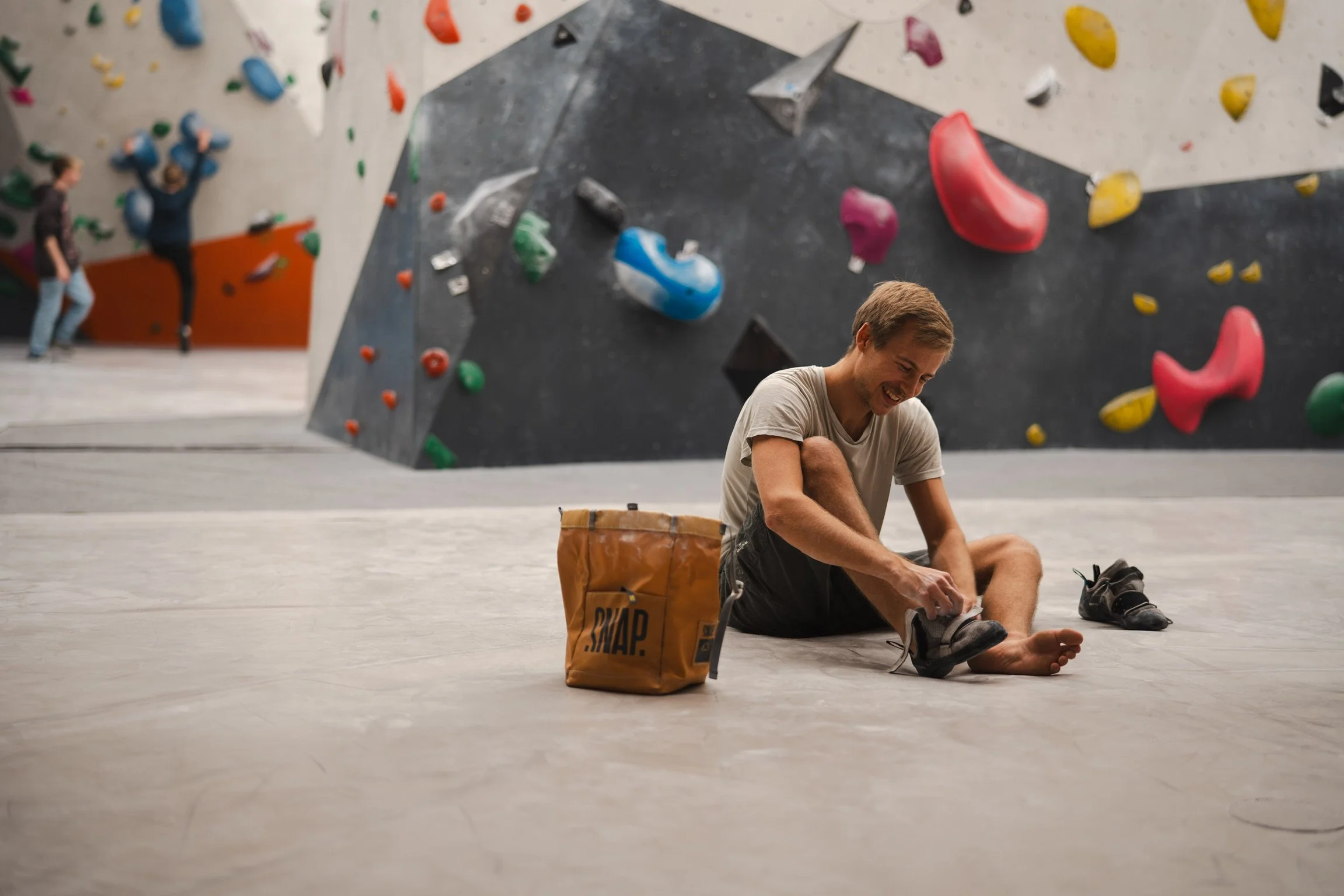
FOR CLIMBERS
The hardest part usually isn't the moves.
Science-backed mental training for climbers.
For climbers who want to work through fear, self-doubt, and the pressure they put on themselves, and get back to enjoying climbing.
Whether you're stuck on a plateau, back off when it starts to matter, or find that climbing has become heavier than it used to be, this is a practical, evidence-informed way to understand what's going on and work with it.
For climbers of all levels. Online worldwide, or in person in Austria. Indoor, outdoor, alpine.
For climbers of all levels. Online worldwide, or in person in Austria. Indoor, outdoor, alpine.

Does this feel familiar?
➤ You know the fall is fine and you still grab the draw.
➤ The injury healed months ago and you still climb around it.
➤ Warm-ups feel great. The go that counts doesn't.
➤ You climb worse when there's a queue behind you.
➤ You get on things you know you can do, so you can't fail on them.
➤ Nothing you send ever counts. It was soft, or lucky, or took too long.
➤ You've stopped looking forward to sessions.
None of this is a lack of trying hard.
These are the patterns we see most, and they respond well to being worked on directly.

What we can help you build.
➤ You keep climbing instead of grabbing the draw.
➤ The go that counts feels like every other go.
➤ You get back after the injury and stop climbing around it or second-guessing yourself.
➤ You get on things you might not send, in front of people who'll see.
➤ A send counts – not soft, not lucky, not too slow.
➤ A bad session stays a bad session. It doesn't make you a bad climber.
➤ You want to go climbing again, and you enjoy it when you get there.
Trusted by the global climbing community.









How we work.
-
Step 1
Request a free intro call
Let’s have a 20-minute call to explore your background, current challenges, and what you want to improve. The call is free and without obligation.
-
Step 2
Get the right recommendation
If it feels like a good fit, we explain the most suitable next step clearly and simply.
-
Step 3
Start online or in-person
Our work is grounded in psychological science and translated into tools, reflections, and approaches you can actually apply in climbing.
Most people work with us for 5 to 10 sessions, not indefinitely. The goal is that you stop needing us.
Testimonials.
★★★★★
I had been struggling with what I thought was a fear of falling, so I originally made an appointment to just "get some tips and tricks to send harder". But in our first appointment Madeleine & I quickly discovered it wasn't just fear of falling. And as she likes to say climbing is a mirror for the other problems in our life, and this couldn't have been more true. Through our work together we discovered and addressed things that were holding me back, not only in climbing but also the rest of my life.
Marco
★★★★★
I have had the pleasure of working with both Carina and Madeleine. They are both incredibly competent and understand the complexities of climbing psychology. Their passion for helping people shines through in their work. I always felt like they cared deeply about my wellbeing and comfort during sessions. I couldn’t recommend them more!
Clea
★★★★★
Cannot recommend Climbing Psychology enough. Madeleine is insightful, understanding and professional with incredible humanity in her approach. Her knowledge and the discussions we have had together have been transformative in my understanding of emotions, fears and motivations, both as a coach and a climber.
Tim
-

Madeleine Crane
FOUNDER, CEO & SPORT PSYCHOLOGIST
Madeleine is a passionate climber who has been climbing for more than 20 years herself, competing nationally and internationally for almost 15 years. She is a certified sport psychologist and systemic coach, lives in the West of Austria (close to the Swiss border) and is specialised on climbing. She has been working with climbers and climbing coaches from all around the globe, regardless of their age or professional level. Madeleine also has a cooperation with the local Olympic Center in Vorarlberg. When she is not working, you will very likely find her at one of the local crags, in the gym or at home, baking something.
-

Carina Junglut
SPORT PSYCHOLOGIST & CLINICAL PSYCHOLOGIST I.E.
Carina is a certified sports psychologist and clinical psychologist based in the stunning climbing mecca of Innsbruck, Austria. Specializing in developmental psychology, her focus lies on working with youth climbers. Having grown up in a nearby mountainous region, Carina feels deeply connected to the landscape. Mountains truly feel like home to her. Passionate about outdoor sports, especially climbing, she cherishes the exhilarating sense of freedom it brings. Carina thrives on pushing her limits and exploring her mental edge.
-

Kaisa Soininen
SPORT PSYCHOLOGIST
Kaisa is a Sports and Exercise Psychologist based in Helsinki, Finland. She has worked with recreational and competitive climbers and specialised in dealing with perfectionism, a high drive for performance among recreational climbers, career transitioning, stress management and commitment via deepening self-knowledge. She found her passion for climbing in her forties and wants to continue climbing for decades ahead.
-
Most of the people we work with aren't. No. The patterns are the same at 5.9 and 5.13. Climbing often isn’t just a sport but a lifestyle. On top, we have observed that patterns that occur in climbing often also reoccur in every day life. Working on your mindset doesn’t only help you in your climbing and make it more enjoyable, but likely will positively impact all other areas of your lives as well.
-
No. This is mental training for climbing, delivered by qualified sport psychologists to know the difference and to tell you if something needs different.
-
Getting started is simple. Reach out through scheduling a call. We’ll walk you through the next steps and answer any questions along the way.
-
No. Most of the work is understanding what's actually happening and why, reocgnizing patterns, then learning practical tools you apply at the gym and at the crag between sessions
-
Video call, same as in person. The work happens at your gym and your crag between sessions anyway, so being in the same room matters less than people expect. We work online worldwide but you can have in-person session in Vorarlberg and Innsbruck, Austria.
-
Most people work with us for 5 to 10. We'll tell you our estimate in the first introduction call as it likely depends on why you come to see us.
-
Very common. Fall practice teaches your body that falling is survivable, which most people already know. It doesn't address what happens at the moment of commitment. That's usually what we work on.
-
English and German.
-
Yes, we all do. Madeleine competed internationally for almost 15 years.
-
Yes. Some people want one session to work out what's going on before committing to a block.
Frequently Asked Questions

Ready to work on the mental side of your climbing?
Request a free 20-minute intro call to discuss your goals, your current challenges, and the kind of support that might help most. There is no pressure and no obligation, just a chance to see whether working together feels like the right fit.